

“Complex” in implant dentistry usually means one of four things: not much bone left, implants that have already failed once, gums that have been infected for years, or a medical history the surgeon has to plan around. These are the cases where “All-on-4 in one trip” is sometimes true and sometimes a sales line, so this guide sets out what is realistic for each, and what a written plan for a complex case must contain before you book a flight.
Bone loss: when grafting is needed and when it is not
Bone shrinks after teeth are lost or dentures are worn for years. The old answer was a graft and a wait of 4–6 months, which means two trips. Three things now avoid that in most cases:
- Tilted implants. The back implants in an All-on-4 are angled to use the bone that remains in front of the sinus and the nerve. This is the standard answer to moderate bone loss and needs no graft.
- Longer or extra implants. An All-on-6 spreads the load where bone quality is poor; it is often the better plan for a soft upper jaw.
- Guided placement. A CBCT scan finds the millimetres of usable bone that a panoramic X-ray cannot, which is why the scan comes before the promise.
When the scan shows the upper jaw has too little bone even for tilted implants, the honest options are a sinus lift with a graft (two trips, 6–9 months overall) or zygomatic implants anchored in the cheekbone, a specialist procedure. Your plan should name which, and should not promise a one-trip All-on-4 until the scan has been read.
Failed implants and old bridges
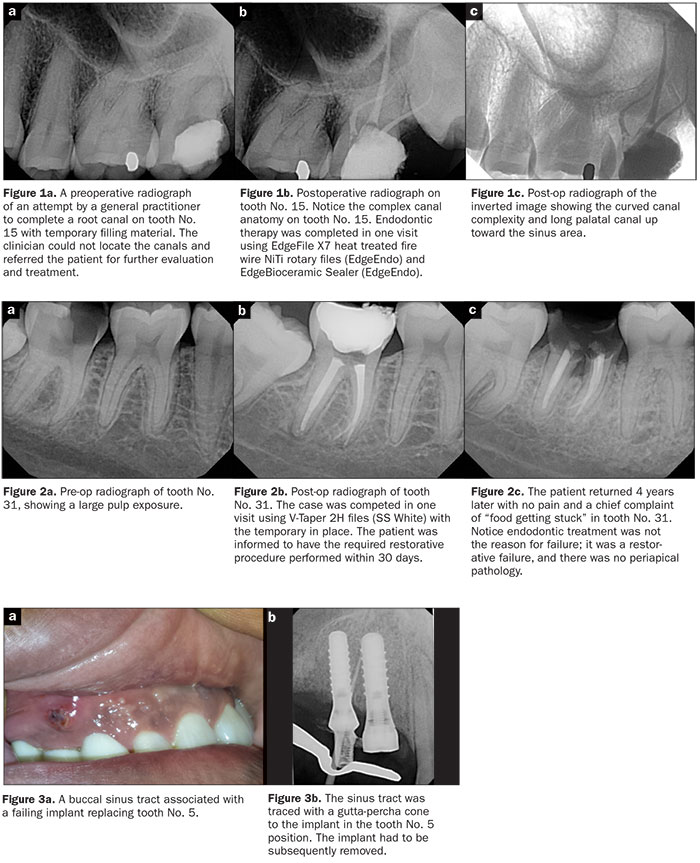
An implant that has failed, whether from infection, overload or a poor placement abroad, has to come out, and the site needs 8–12 weeks to heal before a new one goes in, sometimes with a small graft. That is a two-visit plan by nature, and we say so. What we can usually do in one stay is remove the failed work, clean the sites, and place a full-arch on the remaining bone with a fixed temporary bridge, then finish on a short second visit. The Turkey teeth gone wrong page describes what repair of a failed cosmetic case involves.
Gum disease and long-term denture wearers
Periodontitis has to be treated before implants, not around them: infected teeth are removed, the gums are cleaned and the tissue given time to settle. For a patient who has worn a full denture for ten years the good news is that there is nothing to treat, only bone to measure; the challenge is bite height and lip support, which a wax-up and a temporary bridge resolve before the final teeth are made.
Medical history: what changes the plan
- Controlled diabetes: implants are fine; an HbA1c reading goes in the plan, and healing is watched more closely.
- Smoking: roughly doubles the risk of early failure. We treat smokers, but the plan says so and the guarantee terms reflect it.
- Bisphosphonates and some osteoporosis drugs: need a review of dose and duration before any jaw surgery; tell the coordinator at the first message.
- Anticoagulants, heart conditions, radiotherapy to the head and neck: planned with your physician’s input; sometimes the answer is a different treatment.
Three typical scenarios (illustrative, not patient records)
- Upper denture for eight years, lower teeth failing. Scan shows moderate upper bone loss. Plan: lower extractions and All-on-4, upper All-on-6 with tilted implants, both with fixed temporaries in one stay of about three weeks; final bridges after healing. Price: £6,680–£7,640 depending on the upper system.
- Two implants placed abroad three years ago, now loose. Plan: remove, clean, heal 10–12 weeks at home, return for placement and crowns on a second 8-day visit. Two trips, stated upfront.
- Advanced periodontitis, most teeth mobile, patient diabetic. Plan: clearance and gum treatment first, immediate full-arch only if the scan and blood results allow; otherwise a healing period at home and implants on a second visit.
What a written plan for a complex case must contain
- The scan it was made from, with bone measurements at each implant site.
- The number of trips and the days between them, with the reason.
- Implant system and number, per arch; whether any are tilted or zygomatic.
- Any graft or sinus lift, and how it changes the timeline.
- The medical conditions taken into account and what each changes.
- One price for the whole plan, and what is excluded.
Frequently asked questions
Can I have implants with no bone?
Usually yes, without grafting, using tilted implants or All-on-6; in severe upper-jaw loss the options are a sinus lift or zygomatic implants. The scan decides, not the brochure.
Can failed implants be replaced abroad?
Yes, but as a two-visit plan: removal and healing first, new implants later. Anyone offering same-day replacement of an infected implant is skipping a step.
How much does a full-mouth restoration cost abroad?
In Tbilisi, £6,680 on All-on-4 and £8,600 on All-on-6, both arches, including the surgical guides and the fixed bridges. UK private prices run £16,000–£40,000.
Is one trip realistic for a complex case?
For most bone-loss cases, yes, with immediate loading. For failed implants, grafts or active infection, no, and the plan should say two trips from the start.
The short version
- Bone loss is usually solved without grafting; failed implants and infections need two visits.
- The scan comes before the promise; a one-trip All-on-4 for everyone is a sales line.
- A complex-case plan names trips, systems, grafts, medical factors and one price.
Complex case? Send your scan and a summary of your medical history on WhatsApp. A surgeon replies with a realistic plan, including how many trips, and a fixed price. Free, no deposit.